
Conservit energy guide
Solar O&M and AMC: Protect Long-Term Performance
Why proactive inspection, cleaning, monitoring and maintenance protect the value of a solar asset.
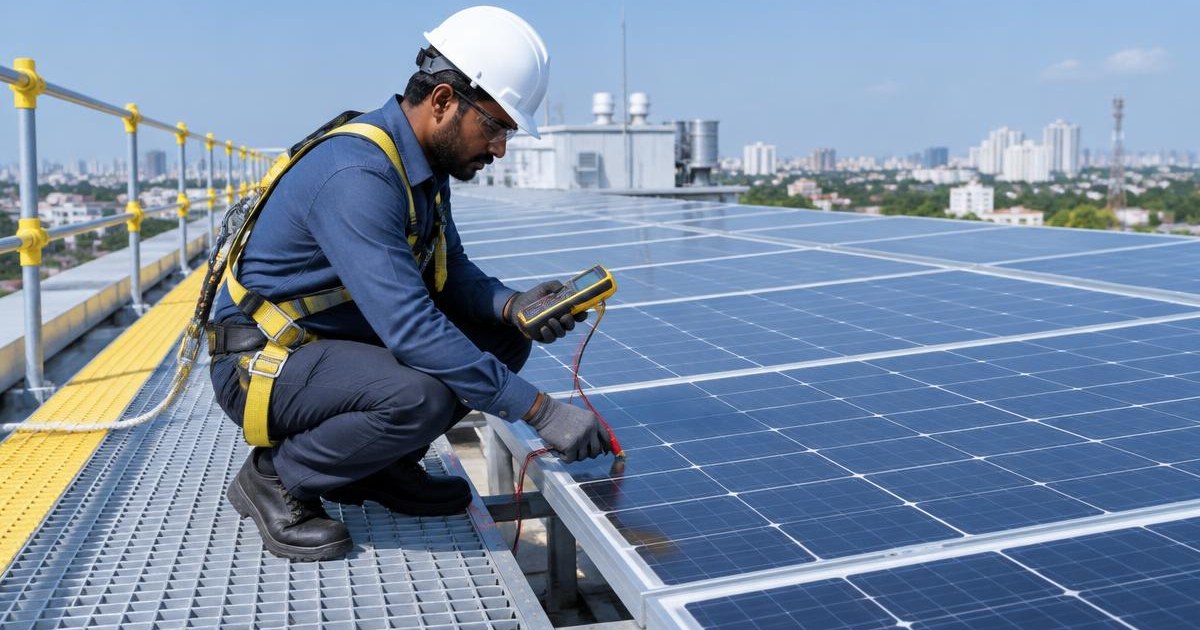
Introduction
Installing a solar system is the beginning of its operating life, not the end of the project. Solar modules, inverters, cables, mounting structures, monitoring systems and electrical equipment need appropriate inspection and maintenance.
Solar operations and maintenance, commonly called O&M, is the process of monitoring, inspecting, maintaining and supporting a solar plant. An Annual Maintenance Contract, or AMC, is a defined service arrangement that specifies the activities, frequency, response time, reporting and responsibilities involved.
A good O&M programme helps customers identify issues early, maintain safe operation and understand whether the plant is performing as expected.
What does solar O&M include?
The exact scope varies by system size, site conditions and contract. It may include:
- Module inspection.
- Cleaning coordination.
- Inverter inspection.
- Cable and connector checks.
- Mounting-structure inspection.
- Earthing and lightning-protection checks.
- Monitoring-system review.
- Fault identification.
- Preventive maintenance.
- Corrective maintenance.
- Performance reporting.
- Safety inspections.
- Vegetation and access management for ground-mounted systems.
The customer should request a written scope rather than assuming that every AMC includes repairs, spare parts or replacement equipment.
Why does solar O&M matter?
Protecting energy generation
Dust, shading, faults, damaged connectors, inverter issues and system downtime can reduce energy output.
Finding faults early
A minor issue may become more expensive if it remains undetected. Regular monitoring and inspection can help identify abnormal performance.
Maintaining safety
Solar systems include DC and AC electrical equipment. Safe operation requires suitable inspection, isolation procedures, protection systems and trained personnel.
Supporting warranty claims
Clear inspection and maintenance records can help document equipment issues and service history.
Understanding system performance
Monitoring data can show whether actual generation is broadly consistent with design expectations, after accounting for weather, seasonality, and operating conditions.
How often should solar panels be cleaned?
Cleaning frequency depends on:
- Dust levels.
- Nearby construction.
- Agricultural activity.
- Pollution.
- Bird activity.
- Rainfall.
- Panel tilt.
- Local environmental conditions.
- Generation impact.
Government rooftop-solar O&M guidance advises regular cleaning and recommends using water with a soft sponge or cloth, avoiding abrasive materials and avoiding cleaning modules when they are excessively hot.
Conservit should avoid publishing one universal cleaning frequency for every location. A suitable maintenance schedule should be based on site conditions and performance observations.
What should be inspected?
Solar modules
Check for:
- Dirt and soiling.
- Cracks or visible damage.
- Hot spots or discolouration.
- Loose components.
- Delamination or moisture-related issues.
- Physical obstructions.
- Bird droppings and stains.
Inverters
Review:
- Error codes.
- Operating status.
- Temperature.
- Ventilation.
- Alarms.
- Generation history.
- DC and AC connections.
- Communication status.
Cables and connectors
Inspect for:
- Loose connections.
- Physical damage.
- Exposed conductors.
- Water ingress.
- Poor routing.
- Connector heating or discolouration.
- Inadequate cable support.
Mounting structures
Check:
- Corrosion.
- Loose fasteners.
- Alignment.
- Structural movement.
- Waterproofing around attachment points.
- Drainage and roof condition.
- Safe access routes.
Earthing and protection
Inspect:
- Earthing continuity.
- Lightning-protection systems.
- Surge-protection devices.
- Equipment bonding.
- Protective devices.
- Labels and isolation points.
Monitoring
Review:
- Daily and monthly generation.
- Inverter availability.
- String performance, where available.
- Alerts and downtime.
- Comparison with expected production.
- Communication failures.
- Unusual changes in performance.
What is an AMC?
An AMC is a contractual arrangement for defined maintenance and support services over a specified period. An AMC may cover preventive visits, monitoring, reporting, troubleshooting and selected corrective work.
Before signing an AMC, clarify:
- Visit frequency.
- Cleaning scope.
- Monitoring process.
- Response time.
- Emergency support.
- Spare-parts treatment.
- Labour charges.
- Replacement-equipment charges.
- Travel charges.
- Inverter and battery coverage.
- Reporting format.
- Performance-review method.
- Contract exclusions.
- Renewal terms.
Don't judge an AMC only by the number of visits. The quality of monitoring, reporting, technical response and documentation also matters.
Why might solar generation decrease?
A reduction in generation may result from:
- Seasonal weather changes.
- Increased dust or soiling.
- New shading.
- Inverter faults.
- String or connector problems.
- Cable damage.
- Monitoring failure.
- Grid downtime.
- Module degradation.
- Changes in operating conditions.
- Equipment or protection trips.
A lower monthly generation figure does not automatically prove that the system is faulty. It should be compared with irradiation, weather, historical performance, system availability and expected seasonal variation.
What is a solar performance audit?
A performance audit is a structured review of how a solar system is operating. It may include:
- Electricity-generation review.
- Monitoring data analysis.
- Inverter and equipment review.
- Site inspection.
- Module and structure inspection.
- Cable and connector checks.
- Earthing and protection checks.
- Fault and downtime review.
- Corrective-action recommendations.
- Follow-up performance verification.
Define the scope based on the system’s capacity, age, technology, and known issues.
O&M for commercial and industrial systems
Large systems may require more structured operations because they involve:
- Multiple inverters.
- Larger electrical infrastructure.
- More complex monitoring.
- Multiple roof sections.
- Higher financial impact from downtime.
- More stringent safety procedures.
- Wider maintenance areas.
- More detailed reporting.
A commercial O&M plan may include monthly performance reports, scheduled inspections, incident logs, corrective-action tracking and management reviews.
How customers can improve maintenance outcomes
Customers should:
- Keep project handover documents safely.
- Maintain access to monitoring credentials.
- Record faults and alerts.
- Avoid untrained electrical work.
- Report physical damage quickly.
- Keep the area around equipment accessible.
- Maintain records of cleaning and inspections.
- Review monthly generation trends.
- Clarify warranty and AMC responsibilities.
- Schedule inspections before severe weather periods where appropriate.
Solar O&M checklist
Conclusion
Solar O&M protects more than equipment. It supports safe operation, reliable monitoring, early fault detection and better understanding of long-term system performance.
The right O&M or AMC plan should be based on the system’s size, site conditions, equipment, operating environment and customer requirements. A written scope with clear responsibilities is essential.
Already have a solar system? Contact Conservit to discuss an O&M, AMC or solar performance-audit requirement.
Below are four original, publication-ready blog drafts for Conservit. One covers EV chargers and includes Conservit’s Tata Power EZ Charge partnership. The other three cover solar project selection, energy management and solar for housing societies.
All Tata Power-related statements should be checked against Conservit’s written partnership authorization before publication. The Tata Power EZ Charge page describes home, workplace, public-place and fleet charging solutions, along with customized installations and network-enabled charging. [tatapower](https://www.tatapower.com/ezcharge)