
Conservit energy guide
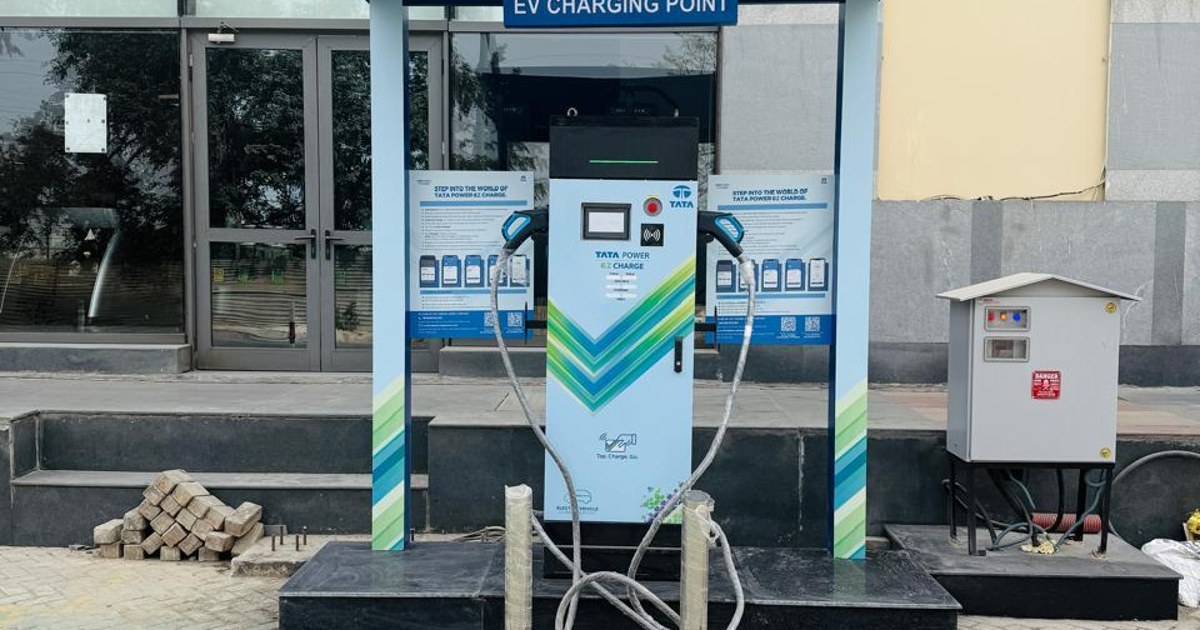
Tata Power EZ Charge at Commercial Spaces: How Charger Owners Are Powering India's EV Shift
How EV chargers at malls, offices, hotels and housing societies strengthen India's charging network, and what commercial property owners should consider before installing a Tata Power EZ Charge solution.
Introduction
India's electric vehicle market has moved from early adoption to everyday use. In FY26, EV registrations in India reached about 2.45 million. The question buyers now ask is not whether EVs make sense, but whether they can charge easily wherever they go.
Public highways and city fast-charging hubs get the headlines. But a large part of daily charging happens somewhere quieter: in the parking lot of an office, a mall, a hotel, a hospital or a housing society. These chargers are owned by property owners and businesses, and together they make the charging network practical for ordinary drivers.
India's charging network is built by many hands
Tata Power's EZ Charge network gives a sense of the scale. The company reports more than 6,700 public and captive charging points, over 2.5 lakh home chargers and more than 1,200 bus charging points, spread across more than 690 cities and towns. Its stated target is 10,000 public charging points and 7.5 lakh home chargers by 2030.
In Maharashtra, Tata Power reports more than 2,400 charging points, including over 1,800 across Mumbai and Navi Mumbai.
Numbers like these are possible because charging points are placed where people already stop: highways, hotels, malls, hospitals, offices, bus and commercial vehicle depots, and residential complexes. Each location that hosts a charger extends the network by one more reliable place to plug in.
Why commercial spaces matter most
Charging works best when it fits into time people already spend somewhere. A driver who parks for two hours at a mall or a full day at an office does not need an ultra-fast charger. They need a dependable one.
For property owners, a charger can serve several goals at once:
- Customer convenience. EV owners can plan visits around places where they know they can charge.
- Longer visits. Charging time can encourage customers and guests to stay.
- Employee and visitor benefit. Workplaces can support staff and company vehicles.
- Charging revenue. Depending on the commercial arrangement, charging sessions can bring in additional income.
- Sustainability positioning. A visible charger signals that a property is ready for the next generation of vehicles.
- Solar integration. Chargers can be paired with rooftop solar to use daytime generation.
The benefit is not automatic. It depends on the location, parking pattern, local EV density and the way the site is run.
How charger owners help the wider ecosystem
When a commercial property installs a Tata Power EZ Charge solution, the effect reaches beyond that building:
- Range confidence. Every additional dependable charging point reduces the worry that stops people from buying an EV.
- Charging closer to where people live and work. Destination charging relieves pressure on highway chargers and spreads demand.
- Local jobs and skills. Installation, electrical work, maintenance and operations create work for local technicians and contractors.
- Better use of the grid. Daytime workplace charging, especially when paired with solar, can match demand with generation.
- Visible adoption. Chargers in everyday places make EVs feel normal to everyone who sees them.
Tata Power reports that its network has enabled more than 41 crore green kilometres and avoided over 15 lakh tonnes of CO2 emissions, a measure of how charging infrastructure translates into real-world impact.
AC or DC: which fits a commercial site?
- AC chargers suit offices, hotels, apartments and places where vehicles park for several hours.
- DC fast chargers suit highway sites, taxis, delivery vehicles, fleets and locations with short parking times and high turnover.
Charging speed also depends on the vehicle's maximum charging capability and battery condition, not only the charger's rating.
What property owners should check before installing
- Sanctioned load and available capacity. Confirm that the connection can support the charger, and whether a load increase is needed.
- Parking layout and cable routing. Bay position, cable length, weather exposure, lighting and protection from impact.
- Who the users are. Staff, visitors, residents, fleet vehicles or the public.
- Access and payment. App-based or RFID access, billing method and usage reports.
- Electricity billing. How consumption will be measured and who pays.
- Load management. How several chargers will share available power.
- Maintenance and support. Who handles faults, and how quickly.
- Future expansion. Space and electrical capacity to add more chargers as demand grows.
- Current rules. Central and state guidelines for public and commercial charging installations.
How Conservit helps
Conservit is a partner for Tata Power EV chargers, subject to applicable Tata Power terms, serviceability and project requirements. For commercial properties, housing societies, offices and fleets, we can help you:
- Understand your charging requirement and likely users.
- Assess the site and its electrical infrastructure.
- Discuss suitable Tata Power charging options.
- Plan the electrical and civil work.
- Coordinate installation, testing and commissioning.
- Explain support and maintenance arrangements.
- Explore pairing your charger with a rooftop solar system.
Frequently asked questions
Will a charger make money for my property?
That depends on your location, traffic, vehicle mix and commercial arrangement. Some owners treat chargers mainly as a customer or employee benefit, others as a revenue line. We review your site before recommending a model.
Do I need a fast charger?
Not always. For long-stay parking, AC chargers are often the better fit. Fast chargers make sense where vehicles stay briefly or must turn around quickly.
Can charging be powered by solar?
Yes. Rooftop solar can supply part of the charger's daytime energy, depending on system size, parking hours and grid connection. Conservit can assess both together.
Is a housing society different from an office?
Yes. Societies need to decide ownership, metering, user access, shared infrastructure costs and maintenance responsibilities before installing.