Conservit energy guide
Solar Monitoring: How to Track Performance and Identify Issues Early
Learn how solar monitoring works, what to track, how to identify performance issues and why monitoring supports better solar O&M decisions.
Introduction
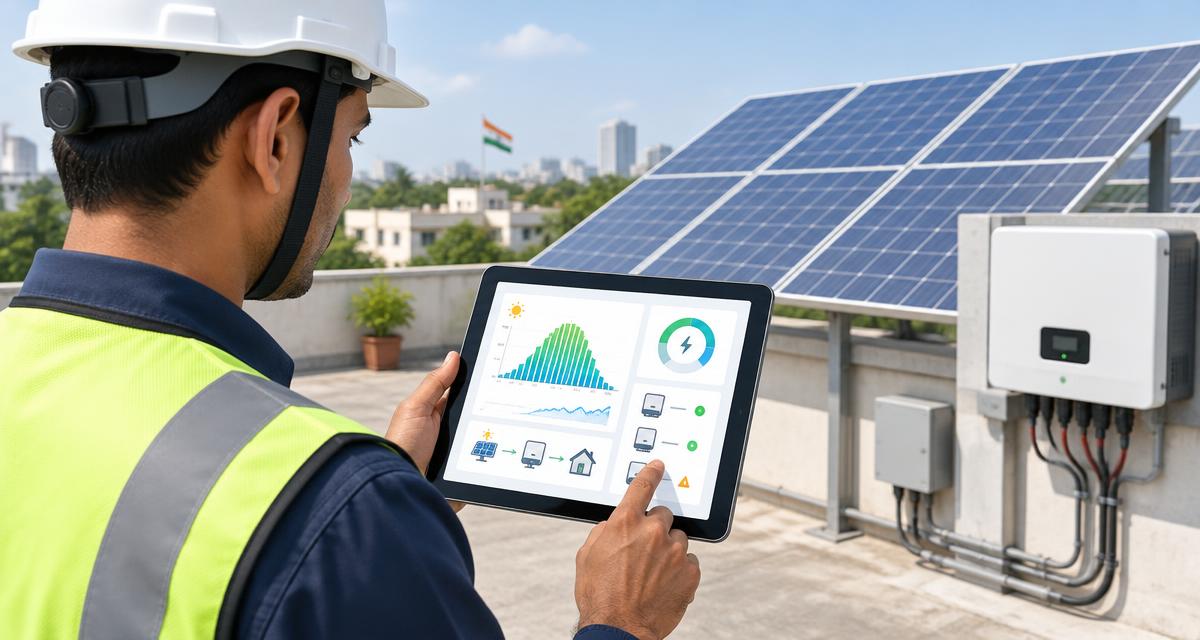
A solar system generates electricity, but generation alone does not tell the full story. Solar monitoring helps customers understand how the system is performing, whether equipment is operating properly and whether maintenance action is required.
Monitoring is useful for both homeowners and businesses. It can help identify underperformance, track generation trends, review inverter status and support maintenance decisions.
What is solar monitoring?
Solar monitoring is the process of collecting and reviewing data from a solar system. Depending on the equipment, monitoring may show:
- Daily, monthly and annual generation.
- Inverter status.
- String-level performance.
- Alerts and faults.
- Grid import and export.
- Battery status, where applicable.
- System availability.
- Environmental or irradiation data, where available.
Monitoring can be accessed through a display, web portal, mobile app or reporting system, depending on the equipment and installation.
Why solar monitoring matters
Identify underperformance
Monitoring can help identify when generation is lower than expected. A drop may be caused by weather, shading, soiling, equipment faults or system downtime.
Detect faults early
Inverter errors, communication failures, string issues and equipment faults can be identified through monitoring alerts.
Support maintenance planning
Monitoring data can help prioritize inspections and maintenance actions.
Understand seasonal variation
Solar generation changes through the year. Monitoring helps customers distinguish between expected seasonal variation and unusual performance loss.
Support warranty and service discussions
Monitoring records can help document system performance and support service or warranty discussions.
What should be monitored?
| Area | What to track |
|---|---|
| Generation | Daily, monthly and annual energy production |
| Inverter | Status, alarms, temperature and availability |
| Strings | String-level output, where available |
| Grid | Import, export and grid availability |
| Battery | Charge level, charge/discharge activity and health, where applicable |
| Faults | Alerts, downtime and error codes |
| Weather | Irradiation or weather context, where available |
| O&M | Cleaning, inspections, repairs and corrective actions |
How to interpret solar monitoring data
Compare generation over time
Review daily, weekly, monthly and annual generation. A single low-generation day may be caused by weather, while a sustained decline may require investigation.
Compare with expected generation
Compare actual generation with expected generation based on system design, season and weather conditions.
Review inverter status
Check for:
- Error codes.
- Alarms.
- Temperature warnings.
- Communication failures.
- Low or zero generation.
- Frequent shutdowns.
Review string performance
Where string-level monitoring is available, compare string outputs. A significant difference between strings may indicate a fault, shading issue or connection problem.
Review grid import and export
For grid-connected systems, review:
- Energy imported from the grid.
- Energy exported to the grid.
- Self-consumption.
- Time-of-use patterns.
- Demand charges, where applicable.
Common monitoring issues
No data or communication failure
The monitoring system may lose connection due to network issues, router problems, inverter settings or communication-device faults.
Generation appears low
Possible causes include:
- Cloudy weather.
- Dust or soiling.
- Shading.
- Inverter fault.
- String issue.
- Grid downtime.
- System shutdown.
- Seasonal variation.
Alerts are ignored
Monitoring is only useful if alerts lead to action. Assign responsibility for reviewing alerts and responding to faults.
Data is not reviewed regularly
A monitoring system should be reviewed periodically, not only when a problem occurs.
Solar monitoring and O&M
Monitoring should be connected to an O&M process. A useful workflow is:
1. Review daily or weekly generation.
2. Check for alerts or abnormal trends.
3. Compare performance with expected output.
4. Investigate unusual changes.
5. Schedule inspection or maintenance.
6. Record findings and corrective actions.
7. Verify performance after resolution.
The Ministry of New and Renewable Energy’s rooftop-solar O&M guidance emphasizes regular inspection and cleaning, reinforcing the importance of a structured maintenance process.
What is a performance ratio?
Performance ratio is a measure of how effectively a solar system converts available solar energy into usable electricity, after accounting for relevant losses.
Performance ratio = Actual energy generated ÷ Theoretical energy expected under measured site conditions.
The exact calculation can vary depending on system design, monitoring equipment and available data. It should be interpreted alongside weather, seasonality, system availability and site conditions.
How Conservit can support
Conservit can help customers:
- Review monitoring data.
- Identify abnormal performance trends.
- Assess inverter and system status.
- Recommend inspection or maintenance actions.
- Discuss O&M or AMC requirements.
- Support performance-audit discussions.